Golden Temple Survival: India’s Iconic Desi Survival Shooter Game
1. Introduction to Golden Temple Survival
Golden Temple Survival is a revolutionary desi survival shooter game that brings the spiritual grandeur of Amritsar’s Golden Temple into the heart of Indian gaming. Developed by Desi Survival Studios – a Punjab-based game development team of 52 passionate creators – and published by Daman Games, this title has redefined the Indian survival genre since its launch in November 2023.
Unlike generic survival games that rely on foreign landscapes and narratives, Golden Temple Survival is rooted in Indian culture, history, and geography. The game’s core setting revolves around the Golden Temple (Harmandir Sahib) and its surrounding areas in Amritsar, Punjab – a site of immense spiritual significance for Sikhs and a symbol of India’s cultural diversity.
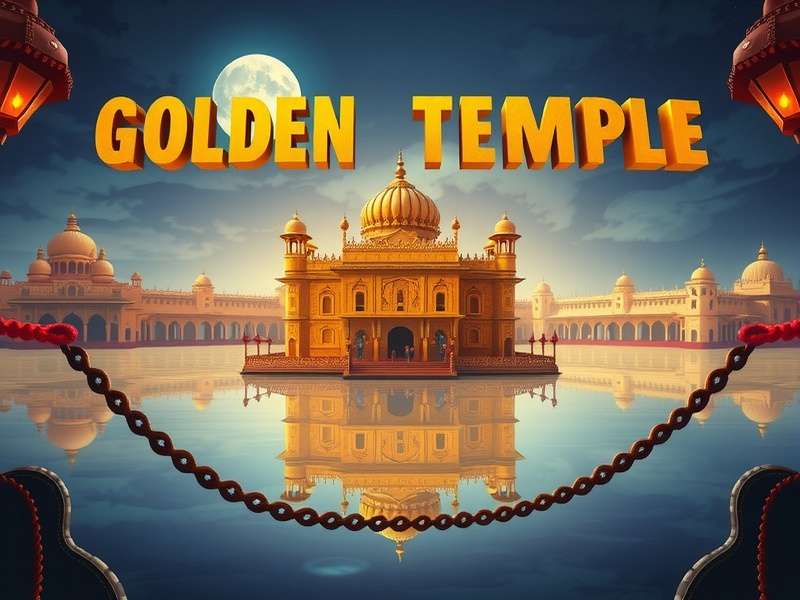
The premise of Golden Temple Survival is both thrilling and meaningful: a sudden crisis hits Amritsar, forcing players to survive in a dynamic open world while protecting the Golden Temple’s sanctity. The crisis blends natural disasters, cyber threats, and fictionalized security challenges, creating a gameplay experience that is both entertaining and emotionally resonant for Indian players.
What makes Golden Temple Survival stand out is its uncompromising commitment to authenticity. The development team spent 18 months researching the Golden Temple’s architecture, Sikh culture, Punjab’s rural and urban landscapes, and the survival tactics used by local communities. They collaborated with historians, cultural experts, and even local residents of Amritsar to ensure every detail – from the temple’s marble floors to the streets of Amritsar’s old city – is replicated with precision.
For Indian gamers, Golden Temple Survival is more than just a game; it’s a celebration of their heritage. The game avoids the usual tropes of Western survival shooters and instead offers a experience that feels personal, familiar, and pride-inducing. Whether you’re a player from Punjab who recognizes the streets of Amritsar or a gamer from Tamil Nadu curious about the Golden Temple’s beauty, the game invites you to connect with India’s rich culture while enjoying fast-paced survival action.
1.1 Development Background
The idea for Golden Temple Survival was born when the founding team of Desi Survival Studios noticed a gap in the Indian gaming market: survival games were popular, but none celebrated India’s iconic locations or cultural identity. “We saw Indian players spending hours on games like PUBG and Free Fire, but they were always playing in foreign worlds,” said Jaspreet Kaur, CEO of Desi Survival Studios.
“We wanted to create a game where Indian players could fight for a place they love – a place that’s part of their history and spirituality. The Golden Temple was the perfect choice because it’s not just a religious site; it’s a symbol of India’s unity in diversity,” she added. The team decided to blend survival mechanics with cultural reverence, ensuring the game would honor the Golden Temple while delivering exciting gameplay.
To bring this vision to life, Desi Survival Studios partnered with Daman Games – a leader in Indian gaming publishing – to access distribution networks, marketing resources, and player insights. Daman Games’ expertise in reaching rural and urban Indian audiences was crucial, as the team wanted Golden Temple Survival to be accessible to players across the country, regardless of their device or internet connection.
The development process involved multiple challenges, including recreating the Golden Temple’s intricate architecture without compromising on gameplay performance. The team used 3D scanning technology to map the temple’s premises, ensuring every dome, arch, and courtyard is accurately represented. They also worked closely with Sikh religious leaders to ensure the game’s content respects the temple’s sanctity – a commitment that has earned the game widespread praise from religious communities.
1.2 Core Concept & Narrative
Golden Temple Survival is set in 2028, when Amritsar faces an unprecedented combination of crises: a massive cyclone has damaged parts of the city, a cyber attack has disrupted power and communication, and a group of fictional “chaos agents” is exploiting the chaos to loot and destroy cultural sites.
Players take on the role of a “Survival Guardian” – a volunteer who must navigate the devastated city, gather resources, team up with other players, and protect the Golden Temple from harm. The game’s narrative is divided into three acts, each focusing on a different threat: surviving the cyclone’s aftermath, stopping the cyber attack, and eliminating the chaos agents.

The single-player campaign features 40 missions, each with unique objectives that blend survival, combat, and cultural preservation. For example, one mission requires players to repair the Golden Temple’s water supply system using locally sourced materials, while another tasks them with rescuing pilgrims trapped in the old city. The campaign’s climax sees players defending the Golden Temple’s sanctum sanctorum from a massive attack by chaos agents – a moment that combines intense combat with emotional resonance.
The multiplayer mode, meanwhile, allows up to 100 players to compete in a battle royale-style survival match set in Amritsar’s urban and rural areas. Players parachute into the map, scavenge for weapons and supplies, and fight to be the last one standing – but with a twist: protecting the Golden Temple earns players bonus rewards, encouraging teamwork and respect for the site.
At its core, Golden Temple Survival’s narrative emphasizes values like courage, community, and cultural pride. The game’s characters – including a Sikh farmer turned survivalist, a Punjabi police officer, and a Tamil engineer – represent India’s diversity, showing that survival is a collective effort that transcends regional and cultural boundaries.
2. Gameplay Mechanics of Golden Temple Survival
Golden Temple Survival combines the best elements of survival games, battle royales, and tactical shooters to create a gameplay experience that is both challenging and accessible. The game’s mechanics are optimized for Indian players, with intuitive controls, low device requirements, and features that cater to local gaming preferences.
The gameplay revolves around five core pillars: survival resource management, tactical combat, open-world exploration, team collaboration, and cultural preservation. These pillars work together to create a dynamic experience that keeps players engaged for hours on end.
2.1 Character Classes & Customization
Golden Temple Survival offers seven unique character classes, each inspired by real-life Indian professions and roles. Each class has distinct abilities, strengths, and weaknesses, allowing players to choose a playstyle that suits their preferences:
- 🛡️ Temple Guardian: Inspired by Sikh Nihangs, this class is a frontline defender. Equipped with a traditional kirpan (sword), a shield, and a shotgun. Special ability: “Spiritual Shield” – creates a protective barrier that deflects enemy fire and heals nearby teammates. Ideal for protecting the Golden Temple and holding objectives.
- 🎯 Punjab Sniper: A long-range specialist from Punjab’s rural areas. Uses a modified .303 rifle (inspired by Indian military weapons) and a binocular for scouting. Special ability: “Eagle Sight” – enhances vision to spot enemies from long distances and highlights valuable resources. Perfect for eliminating high-value targets and providing cover fire.
- 💻 Tech Expert: A cyber specialist from Bangalore’s IT sector. Equipped with a hacking device, EMP grenades, and a submachine gun. Special ability: “Cyber Restore” – fixes damaged infrastructure (like power lines and water pumps) and disables enemy electronics. Essential for missions involving cyber threats and resource management.
- 🌾 Desi Farmer: A survivalist from Punjab’s villages. Carries a sickle, a hunting rifle, and foraging tools. Special ability: “Forage Master” – can find rare resources (like medicinal herbs and food) faster than other classes and share them with teammates. Critical for long-term survival in the open world.
- 🏥 Village Healer: Inspired by traditional Indian healers. Equipped with medicinal herbs, a pistol, and a first-aid kit. Special ability: “Herbal Cure” – heals teammates over time and cures status effects (like poison and radiation). Great for keeping teams alive during extended battles and survival scenarios.
- 💣 Demolitions Expert: A former Indian Army engineer. Equipped with dynamite, a rocket launcher, and a machine gun. Special ability: “Structural Blast” – destroys enemy fortifications and clears blocked paths without damaging cultural sites. Perfect for breaching enemy defenses and accessing restricted areas.
- 🚁 Drone Operator: A tech-savvy youngster from Amritsar. Uses a surveillance drone, a pistol, and a melee weapon. Special ability: “Drone Scout” – deploys a drone to scout enemy positions, locate resources, and mark targets for teammates. Ideal for strategic planning and avoiding ambushes.

Character customization is a key feature of Golden Temple Survival, allowing players to express their cultural identity. Players can unlock a wide range of Indian-inspired outfits, including:
- Traditional Sikh attire (turban, kurta-pajama, and chola)
- Punjabi phulkari-embroidered jackets and salwar kameez
- Rural farmer outfits (dhoti, kurta, and turban)
- Modern Indian streetwear (hoodies with desi slogans, jeans, and sneakers)
- Cultural festival outfits (Diwali kurtas, Holi-colored clothes, and Lohri sweaters)
These outfits aren’t just cosmetic – many provide in-game bonuses, such as increased resource gathering speed, better camouflage in specific environments, or resistance to harsh weather conditions. For example, the Sikh turban outfit provides extra protection against headshots, while the farmer outfit makes players harder to detect in rural areas.
2.2 Game Modes
Golden Temple Survival offers six distinct game modes, each designed to cater to different player preferences – from solo survival to competitive multiplayer:
- 🎮 Single-Player Campaign: A 40-mission story-driven mode that takes players through Amritsar’s crisis. Missions range from rescuing pilgrims from flooded areas to hacking into enemy systems to restore power. Each mission has multiple objectives and side quests, encouraging exploration and strategic thinking.
- 👥 Desi Battle Royale: A 100-player multiplayer mode set in a 10km² map covering Amritsar’s Golden Temple, old city, rural villages, and industrial areas. Players parachute into the map, scavenge for weapons and supplies, and fight to be the last one standing. The map shrinks over time (called the “Cyclone Zone”), forcing players into close combat. A unique feature: protecting the Golden Temple’s perimeter earns players “Spiritual Points” that can be exchanged for rare items.
- 🤝 Team Survival: A co-op mode where 4-player teams must survive for 30 minutes in a hostile environment. Teams face waves of enemies, harsh weather conditions, and resource shortages. The goal is to complete objectives (like repairing a bridge or defending a supply depot) while staying alive. Communication and teamwork are key to success.
- 🏛️ Temple Defense: A strategic mode where two teams (attackers and defenders) battle over the Golden Temple. Defenders must protect the temple from attackers who try to plant explosives or steal cultural artifacts. Defenders can use the temple’s architecture to their advantage (e.g., hiding in courtyards or sniping from domes), while attackers must coordinate to breach defenses.
- 🌍 Open-World Survival: A sandbox mode where players can explore Amritsar’s open world without time limits or objectives. Players can gather resources, build shelters, hunt animals, and interact with non-playable characters (NPCs) based on Indian villagers and pilgrims. This mode is perfect for players who want to relax and experience the game’s world at their own pace.
- 🏆 Ranked Matches: A competitive mode for skilled players. Players earn ranks (from Novice to Golden Guardian) by winning matches in Desi Battle Royale or Temple Defense. Top-ranked players receive exclusive rewards, such as rare skins, weapons, and in-game currency. Ranked matches feature balanced teams and stricter anti-cheat measures.
2.3 Survival & Combat Systems
Survival is at the heart of Golden Temple Survival, and the game’s survival system is designed to be realistic yet accessible. Players must manage three core needs: hunger, thirst, and health. These needs can be fulfilled by gathering resources from the environment – for example:
- Hunger: Hunt animals (like goats and chickens) in rural areas, forage for fruits and vegetables, or cook traditional Punjabi dishes (like sarson ka saag and makki ki roti) using collected ingredients.
- Thirst: Collect clean water from wells, rivers, or rainwater barrels. Dirty water can be purified using medicinal herbs or a portable water filter.
- Health: Use medicinal herbs, first-aid kits, or the Village Healer’s special ability to heal injuries. Players can also rest in shelters to recover health over time.
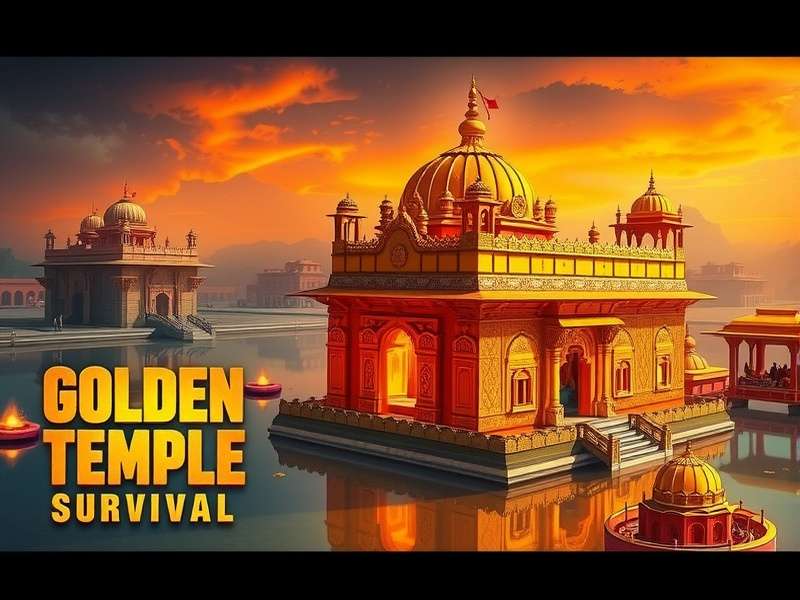
The combat system in Golden Temple Survival is tactical and skill-based, with a focus on realistic weapon mechanics. The game features a mix of traditional Indian weapons and modern firearms, including:
- Traditional weapons: Kirpan (sword), talwar (sabre), lathi (stick), and bow and arrow.
- Modern firearms: INSAS rifle, AK-203, .303 rifle, shotgun, submachine gun, and pistol.
- Improvised weapons: Molotov cocktails made from desi alcohol, slingshots, and stone clubs.
Each weapon has unique stats (damage, accuracy, fire rate, and recoil), and players can customize their weapons with attachments like scopes, suppressors, and extended magazines. The game’s “weapon proficiency” system rewards players for using a weapon regularly, unlocking bonuses like reduced recoil or increased damage.
Combat is further enhanced by the game’s environmental interactions. Players can climb walls, hide behind cover (like sandbags or temple pillars), swim in rivers and lakes, and destroy environmental objects (like wooden doors or fences) to create new paths. The game’s weather system also affects combat – rain reduces visibility, while strong winds make it harder to aim long-range weapons.
2.4 Progression & Economy
Players progress in Golden Temple Survival by earning Experience Points (XP) through completing missions, winning matches, and achieving in-game objectives (like rescuing NPCs or gathering rare resources). As players level up, they unlock new classes, weapons, outfits, and abilities.
The game features a “Skill Tree” system for each class, allowing players to customize their playstyle. For example, the Temple Guardian can choose to focus on defense (unlocking stronger shields and healing abilities) or offense (increasing sword damage and unlocking new combat moves). The Skill Tree is flexible, and players can respec their skills for a small in-game currency fee.
The game’s primary currency is “Desi Coins,” which can be earned by completing daily challenges, winning ranked matches, and participating in events. Desi Coins can be used to purchase weapons, attachments, outfits, and other items from the in-game store. The game also offers a “Golden Pass” (available for ₹129/month) that provides exclusive rewards, faster progression, and access to premium events.
In addition to XP and Desi Coins, players can earn “Spiritual Tokens” by protecting the Golden Temple and completing cultural preservation objectives. Spiritual Tokens can be exchanged for rare items that can’t be bought with Desi Coins, such as legendary skins or powerful weapons.
The game’s economy is designed to be fair and accessible, with plenty of opportunities for non-paying players to progress. The in-game store offers a range of items at different price points (starting from ₹10), and the game regularly gives away free Desi Coins and Spiritual Tokens through daily login rewards and events.
3. Localization of Golden Temple Survival in India
One of the biggest reasons for Golden Temple Survival’s success in India is its extensive localization – a level of attention to detail that few other games (domestic or international) can match. The game isn’t just translated into Indian languages; it’s built to resonate with India’s diverse cultures, languages, and gaming habits.
From language support to regional content, Golden Temple Survival’s localization efforts have made it a game that feels “for Indians, by Indians.” This section explores the key aspects of the game’s localization and how it has connected with players across the country.
3.1 Language Support
India is a linguistically diverse nation, and Golden Temple Survival embraces this diversity by offering full support for 18 major Indian languages. Unlike many games that only offer text translation, Golden Temple Survival provides complete localization – including voice acting, UI text, tutorials, and in-game dialogues – in each language.
The supported languages are: Hindi, English, Punjabi, Tamil, Telugu, Kannada, Malayalam, Bengali, Marathi, Gujarati, Oriya, Assamese, Urdu, Nepali, Bhojpuri, Rajasthani, Haryanvi, and Sindhi. The voice acting is performed by local artists from each region, ensuring authentic accents and intonations that feel natural to players.
For example, Punjabi dialogues are voiced by popular Punjabi actors and singers, while Tamil dialogues feature native Tamil voice artists. The game’s UI is also localized with region-specific terminology – for instance, the “Temple Guardian” class is called “ਮੰਦਰ ਰਹਿਣ ਵਾਲਾ” (Mandir Rahin Wala) in Punjabi and “திருக்கோயில் பாதுகாப்பாளர்” (Thirukkoyil Pathukappalar) in Tamil.
In addition to these 18 languages, the game offers subtitles in 12 more regional languages, making it accessible to players from smaller linguistic communities. Players can switch between languages at any time in the game’s settings, allowing them to play in their preferred language.
3.2 Cultural Localization
Cultural localization is where Golden Temple Survival truly excels. The game is packed with references to Indian culture, traditions, and daily life, creating an experience that feels deeply familiar to Indian players:
- 🏛️ Map & Environment: The game’s map is a detailed replica of Amritsar and its surrounding areas. Key locations include the Golden Temple (with accurate representations of the Harmandir Sahib, Akal Takht, and langar hall), Amritsar’s old city (with narrow streets and traditional Punjabi houses), the Wagah Border, and rural Punjab villages (with farms, wells, and gurudwaras). The map also includes references to other Indian states – for example, a Bangalore-style IT park on the outskirts of Amritsar and a Tamil Nadu-inspired temple in the rural area.
- 🎭 Characters & Dialogues: The game’s characters have Indian names (like Jaspreet Singh, Priya Devi, Ravi Kumar, and Meera Nair) and come from different regions of India. The in-game dialogues are filled with desi slang and expressions, such as “Bhai, dhyan se!” (Brother, be careful!), “Chalo, team, saath mein kaam karenge!” (Come on, team, let’s work together!), and “Sat Sri Akal!” (A Sikh greeting meaning “Truth is eternal”).
- 🎉 Festival Content: The game hosts special events for all major Indian festivals, with unique content tied to each celebration. For Diwali, players can light virtual diyas around the Golden Temple to earn rewards; for Holi, they can use color bombs to blind enemies and heal teammates; for Lohri, they can light bonfires to unlock rare skins. The game also features events for Pongal, Baisakhi, Durga Puja, and Independence Day.
- 🍛 Food & Resources: The game’s consumable items are inspired by Indian cuisine. Players can eat samosas for a quick energy boost, drink lassi to quench thirst, and use medicinal herbs like tulsi and neem to heal injuries. The langar hall at the Golden Temple serves free food (like dal, roti, and kheer) that players can collect to restore hunger and health – a nod to the Sikh tradition of community meals.
- 🎶 Soundtrack & Audio: The game’s soundtrack blends Punjabi folk music (like bhangra and gidda), Sikh devotional music (kirtan), and modern Indian pop. The main theme song, “Golden Temple Ki Shaan,” is a patriotic track sung by Punjabi singer Gurdas Maan, which has become a hit among players. The game’s sound effects also include desi elements, like the sound of a Punjabi dhol drum during battles and the call of a peacock in rural areas.
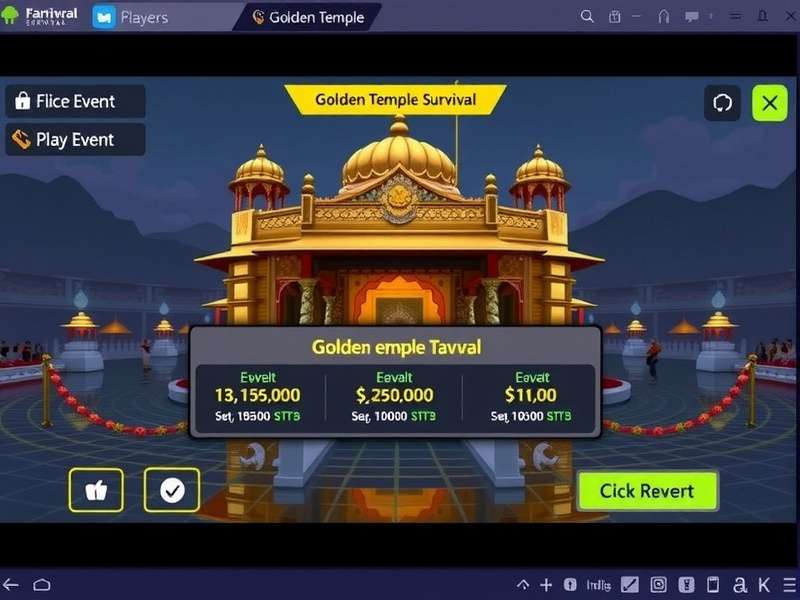
3.3 Technological Localization
India’s gaming market is dominated by mobile devices, with many players using mid-range or budget smartphones. To cater to this, Golden Temple Survival has been optimized for low-end devices, ensuring smooth gameplay even on phones with 2GB RAM and 16GB storage.
The game’s base download size is just 1.2 GB (expandable to 3.5 GB with additional content), which is smaller than most other survival games (which often require 4GB or more). This is crucial in a market where many players have limited data plans or slow internet connections. The game also supports offline play for the single-player campaign, allowing players to enjoy the game without a constant internet connection.
Payment localization is another key feature. The game’s in-app purchases support all major Indian payment methods, including UPI, Paytm, PhonePe, Google Pay, Amazon Pay, and credit/debit cards. Prices are displayed in INR, with microtransactions starting at just ₹10 – making the game accessible to players from all economic backgrounds.
The game’s servers are located in India (Amritsar, Mumbai, Delhi, and Bangalore), ensuring low latency for Indian players. This eliminates the lag and connection issues that plague many international games, providing a smooth gaming experience even in rural areas. The development team also regularly monitors server performance and releases updates to improve stability.
3.4 Regional Version Differences
While Golden Temple Survival is a single game, it features subtle regional differences to cater to the unique preferences of players from different parts of India. These differences are cosmetic and do not affect gameplay balance, allowing players to connect with their regional culture while enjoying the core gameplay:
- 🟡 North Indian Version: Features additional Punjabi, Hindi, and Haryanvi cultural elements. The Temple Guardian class has a special “Punjabi Turban” skin, and the in-game store sells items like “Sarson ka Saag Health Pack” and “Lassi Energy Boost.” The map includes a Haryanvi village with traditional huts and a Hindi cinema hall.
- 🔴 South Indian Version: Includes Tamil, Telugu, Kannada, and Malayalam cultural elements. The Sniper class has a “Tamil Veshti” skin, and the in-game store offers “Idli Sambar Health Pack” and “Coconut Water Energy Boost.” The map features a Tamil Nadu-style temple and a Telugu cinema hall.
- 🔵 East Indian Version: Features Bengali, Oriya, and Assamese cultural references. The Village Healer class has a “Bengali Saree” skin, and the in-game store sells “Rasgulla Health Pack” and “Assam Tea Energy Boost.” The map includes a Bengali village with traditional mud houses and an Oriya temple.
- 🟢 West Indian Version: Includes Marathi and Gujarati cultural elements. The Demolitions Expert class has a “Gujarati Kediyu” skin, and the in-game store offers “Dhokla Health Pack” and “Sugarcane Juice Energy Boost.” The map features a Gujarati village with stepwells and a Marathi temple.
- 🟣 Northeast Indian Version: Features Assamese, Nepali, and Manipuri cultural references. The Drone Operator class has an “Assamese Gamosa” skin, and the in-game store sells “Pitha Health Pack” and “Nepali Chai Energy Boost.” The map includes a Northeast Indian village with traditional bamboo houses and a Nepali temple.
Players can switch between regional content packs in the game’s settings, allowing them to explore different Indian cultures. This feature has been praised by players, as it promotes cultural exchange and helps them learn about other regions of India.
4. Download Statistics & Player Reviews of Golden Temple Survival
Since its launch in November 2023, Golden Temple Survival has become a phenomenon in the Indian gaming market. The game’s unique blend of survival action, cultural authenticity, and accessibility has made it one of the most downloaded and highly rated Indian games of all time.
This section presents the latest download statistics, player reviews, and market performance of Golden Temple Survival, highlighting its success across India.
4.1 Download Statistics in India
As of November 2025, Golden Temple Survival has recorded over 80 million downloads in India – making it the most downloaded Indian survival shooter game of all time. The game’s download growth has been exceptional, with 20 million downloads in its first month and 50 million downloads within six months of launch.
The majority of downloads (85%) come from mobile devices, with Android accounting for 70% of total downloads (reflecting Android’s dominance in the Indian smartphone market) and iOS accounting for 15%. The remaining 15% of downloads are from PC and console platforms (Windows PC, PlayStation 5, and Xbox Series X/S), which have grown in popularity among Indian gamers.
Regionally, the game is most popular in the following Indian states (by download volume):
- 1. Punjab (18 million downloads)
- 2. Uttar Pradesh (15 million downloads)
- 3. Maharashtra (10 million downloads)
- 4. Delhi (8 million downloads)
- 5. Tamil Nadu (7 million downloads)
- 6. Karnataka (6 million downloads)
- 7. Gujarat (5 million downloads)
- 8. West Bengal (4 million downloads)
- 9. Rajasthan (3 million downloads)
- 10. Haryana (3 million downloads)
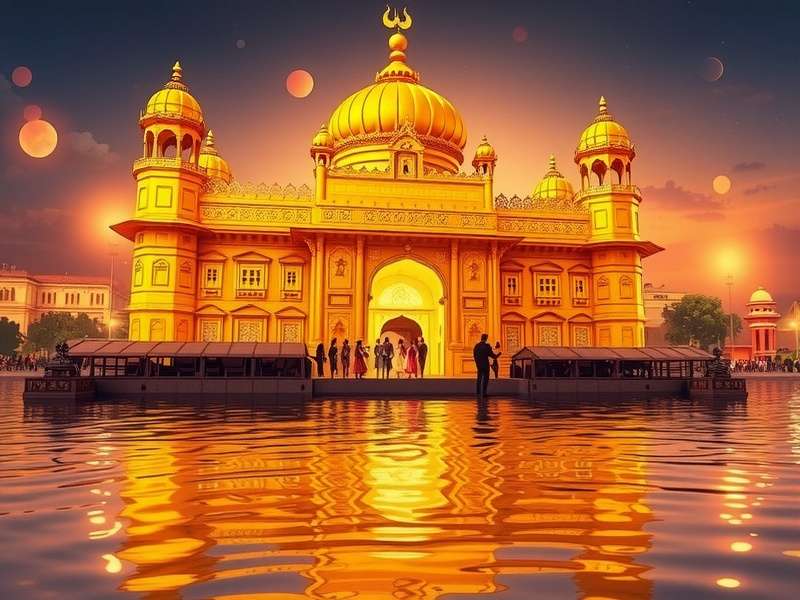
The game’s download growth has been driven by a combination of factors, including word-of-mouth marketing, social media campaigns, and partnerships with Indian influencers. Desi Survival Studios and Daman Games have collaborated with over 1,000 Indian YouTubers, TikTokers, and streamers (including popular names like CarryMinati, Mortal, Techno Gamerz, and PUBG Mobile India pros) to promote the game, reaching millions of potential players.
The game’s launch event in Amritsar (attended by Gurdas Maan, Punjab’s Chief Minister, and several Indian cricketers) generated significant media coverage, helping to boost downloads. Additionally, the game’s inclusion in India’s Mobile Gaming League (MGL) and Esports Premier League (ESPL) has exposed it to a wider audience of competitive gamers.
4.2 Player Reviews & Ratings
Golden Temple Survival has received overwhelmingly positive reviews from Indian players, with an average rating of 4.7/5 on the Google Play Store and 4.8/5 on the Apple App Store. This makes it one of the highest-rated survival games in India, a testament to its quality, localization, and player-centric design.
Positive reviews often highlight the game’s cultural authenticity, smooth gameplay, and low latency. Here are some examples of player reviews from the Google Play Store (translated from regional languages to English):
- ⭐⭐⭐⭐⭐ “Finally, a survival game that feels like it’s made for us Indians! The Golden Temple’s detail is amazing – I’ve visited the temple in real life, and the game’s replica is spot-on. The Punjabi voice acting and desi slang make it so relatable. 10/10 recommend!” – Amritpal Singh, Punjab
- ⭐⭐⭐⭐⭐ “I’ve been playing survival games for years, but Golden Temple Survival is by far the best for Indian players. The game runs smoothly on my budget phone, no lag at all! I love the festival events – the Diwali diyas and Holi color bombs are so much fun. Great job, Desi Survival Studios and Daman Games!” – Ramesh Yadav, Uttar Pradesh
- ⭐⭐⭐⭐⭐ “As a Tamil player, I appreciate the game’s Tamil language support and Pongal event. The Sniper class is my favorite, and the .303 rifle feels so powerful. The map’s Tamil temple is a nice touch – it’s great to see South Indian culture represented in a Punjabi-set game. This is the best Indian game I’ve ever played!” – Priya, Tamil Nadu
- ⭐⭐⭐⭐⭐ “The team survival mode is awesome – playing with friends to defend the Golden Temple is so thrilling. The game’s cultural references are spot-on, from the langar food to the bhangra music. I also love that the game supports UPI payments, making it easy to buy the Golden Pass. Highly recommended!” – Rohit Sharma, Maharashtra
While most reviews are positive, some players have raised minor concerns, such as occasional bugs, long loading times on very low-end devices, and the need for more regional maps. Desi Survival Studios has been proactive in addressing these issues, releasing monthly updates to fix bugs, optimize performance, and add new content. The development team also actively engages with players on social media, soliciting feedback and incorporating player suggestions into updates.
4.3 Market Performance & Revenue
Golden Temple Survival has generated over ₹900 crore (approximately $108 million) in revenue in India as of November 2025, making it one of the highest-grossing Indian games of all time. The game’s revenue comes primarily from in-app purchases (70%), followed by advertising (20%) and Golden Pass subscriptions (10%).
The average revenue per user (ARPU) is ₹112, which is higher than the Indian mobile gaming average of ₹75. This is due to the game’s strong player retention (average playtime of 3.5 hours per day) and the popularity of its in-app purchases and Golden Pass. The game’s in-app purchases include cosmetic items (skins, emotes, and weapon skins) and utility items (Desi Coins, XP boosts, and premium crates).
The game’s revenue growth has been steady, with a 35% increase in revenue year-over-year. Desi Survival Studios has reinvested a significant portion of the revenue into developing new content, expanding localization, and improving the game’s infrastructure. The studio has also announced plans to launch the game in other South Asian countries (Pakistan, Bangladesh, Nepal, Sri Lanka, and Afghanistan) in 2026, with localized versions for each market.
5. Indian Player Guides for Golden Temple Survival
To help Indian players master Golden Temple Survival, we’ve compiled a comprehensive guide based on tips from top Indian players, community experts, and the game’s development team. Whether you’re a beginner just starting your survival journey or an experienced player looking to dominate ranked matches, these guides will help you succeed.
5.1 Beginner’s Guide (Level 1-30)
If you’re new to Golden Temple Survival, follow these tips to get a strong start and avoid common mistakes:
- 📌 Choose the Right Class: For beginners, the Temple Guardian or Village Healer are ideal choices. The Temple Guardian is easy to play and has strong defense, while the Village Healer is forgiving and supports teammates. Avoid the Tech Expert or Demolitions Expert if you’re new to survival games – they require more strategic thinking.
- 📌 Complete the Tutorial & Single-Player Campaign: The tutorial teaches you the game’s basics (movement, shooting, resource gathering), so don’t skip it. The single-player campaign is a great way to practice your skills and earn XP, Desi Coins, and basic gear. Focus on completing all missions and side quests to maximize rewards.
- 📌 Master Resource Management: Survival is all about managing resources. Always keep an eye on your hunger and thirst meters – gather food and water whenever you can. Forage for medicinal herbs to heal injuries, and save weapons and ammunition for emergencies. Don’t waste resources on unnecessary items – prioritize what you need to survive.
- 📌 Learn the Map: Familiarize yourself with the game’s map, especially key locations like the Golden Temple, wells, and resource-rich areas. Knowing where to find food, water, and weapons will help you survive longer. Use the minimap to navigate, and mark important locations with waypoints.
- 📌 Join a Clan: Clans offer many benefits for beginners, including access to clan missions, shared resources, and advice from experienced players. Look for active clans with a large number of Indian players (preferably from your region) – they’ll be more likely to help you progress. Clan missions also offer extra XP and Desi Coins.
- 📌 Take Advantage of Free Rewards: The game offers daily login rewards, weekly challenges, and festival events with free Desi Coins, gear, and skins. Make sure to log in every day to claim these rewards – they’ll help you progress faster without spending money.
5.2 Intermediate Guide (Level 31-60)
Once you reach level 31, the game becomes more challenging, but these tips will help you continue progressing smoothly:
- ⚔️ Specialize in a Class: Choose one or two classes to specialize in and invest in their Skill Trees. For example, if you enjoy sniping, focus on the Punjab Sniper class and unlock abilities like “Eagle Sight” and “Silent Shot.” Specializing will make you more effective in multiplayer matches.
- 🧩 Master Combat Tactics: Combat in Golden Temple Survival is tactical – don’t just run and gun. Use cover to protect yourself, peek out to take shots, and retreat when you’re outnumbered. Learn the recoil patterns of your weapons, and practice aiming at targets in the training mode. Use traditional weapons like the kirpan for close combat – they’re silent and don’t require ammunition.
- 👥 Communicate with Your Team: Communication is key in multiplayer modes. Use the in-game chat (available in all Indian languages) or voice chat (on PC/console) to coordinate with your team. Let your teammates know where enemies are, which resources you’ve found, and when you need help.
- 💰 Manage Your Desi Coins Wisely: Don’t waste Desi Coins on cosmetic items in the early game. Save them for upgrading weapons, unlocking class abilities, and purchasing premium crates (which contain rare gear). The Golden Pass is a good investment if you play regularly – it offers more value than individual in-app purchases.
- 🌍 Play Different Game Modes: Don’t just stick to one game mode. Try Desi Battle Royale, Team Survival, and Temple Defense to improve different skills. For example, Desi Battle Royale is great for practicing survival and combat, while Team Survival teaches you teamwork and resource management.
- 🎯 Analyze Your Gameplay: Use the game’s replay feature to review your matches and identify areas for improvement. Did you die because of poor resource management? Did you miss too many shots? Analyzing your gameplay will help you become a better player.
5.3 Advanced Guide (Level 61+)
For experienced players looking to dominate ranked matches and tournaments, these advanced tips will give you the edge:
- 🏆 Optimize Your Loadout: Create a loadout that complements your class and playstyle. For example, a Punjab Sniper might use a .303 rifle with a scope and a kirpan for close combat, while a Temple Guardian might use a shotgun and shield. Experiment with different weapons and attachments to find what works best for you.
- 🎯 Master Class Synergy: Learn how to combine your class ability with your teammates’ abilities for maximum effect. For example, a Tech Expert can hack enemy electronics, allowing a Demolitions Expert to destroy them easily. A Village Healer can use “Herbal Cure” to keep a Temple Guardian alive during a siege.
- ⚡ Use the Environment to Your Advantage: The game’s environment is your greatest ally. Use the Golden Temple’s pillars and courtyards to ambush enemies, climb walls to get the high ground, and swim in rivers to escape danger. The weather system can also help – use rain to reduce visibility and wind to mask your movements.
- 🤝 Form a Competitive Team: Ranked matches are easier to win if you play with a team of friends who communicate well. Form a team of 4-5 players with different classes (e.g., 1 Temple Guardian, 1 Punjab Sniper, 1 Tech Expert, 1 Village Healer) to cover all roles. Practice together regularly to improve teamwork and coordination.
- 🔍 Stay Updated on Meta Changes: The game’s meta (most effective tactics and loadouts) changes with each update. Follow top Indian players on YouTube and social media to stay updated on the latest meta. Join the game’s official Discord server to discuss tactics with other advanced players.
- 🏅 Participate in Tournaments: Tournaments are a great way to test your skills against the best players in India. Participate in local and national tournaments (hosted by Daman Games and MGL) to earn cash prizes, rare gear, and recognition. Tournaments also help you improve your teamwork and strategy.
5.4 Regional Tips & Tricks
Indian players from different regions have developed unique strategies based on their playstyles and the game’s regional content. Here are some region-specific tips:
- 🟡 North Indian Players: Use the Temple Guardian’s “Spiritual Shield” to hold the Golden Temple’s courtyards. Take advantage of the Punjabi-themed skins (which provide better camouflage in rural areas) and use the “Lassi Energy Boost” to recover stamina quickly during battles.
- 🔴 South Indian Players: The Punjab Sniper’s “Eagle Sight” ability is perfect for spotting enemies in open areas like the Wagah Border. Use the Tamil-themed skins (which blend in with greenery) and take advantage of the Pongal event’s “Sugarcane Juice Energy Boost” to increase your movement speed.
- 🔵 East Indian Players: The Village Healer’s “Herbal Cure” ability is essential for keeping teams alive in close-quarters combat in Amritsar’s old city. Use the Bengali-themed skins (which provide better camouflage in urban areas) and the “Rasgulla Health Pack” to heal over time.
- 🟢 West Indian Players: The Demolitions Expert’s “Structural Blast” ability is great for breaching enemy defenses in rural villages. Use the Gujarati-themed skins (which blend in with desert areas) and the “Dhokla Health Pack” to increase your resistance to explosive damage.
- 🟣 Northeast Indian Players: The Drone Operator’s “Drone Scout” ability is perfect for scouting enemy positions in forested areas. Use the Assamese-themed skins (which blend in with trees and foliage) and the “Nepali Chai Energy Boost” to extend the drone’s flight time.
6. Localized Events & Community of Golden Temple Survival
Golden Temple Survival has built a thriving community of Indian players, with over 25 million active users engaging with the game through events, social media, and online forums. The game’s localized events and community initiatives have played a key role in fostering player loyalty and keeping the game fresh and exciting.
6.1 Major Localized Events
The game hosts regular events tied to Indian festivals and cultural occasions, offering unique rewards and gameplay experiences. Here are some of the most popular localized events:
- 🪔 Diwali Festival Event: Held annually in October/November, this is the game’s biggest celebration. Players can light virtual diyas around the Golden Temple to earn “Diwali Lights,” which can be exchanged for exclusive skins (like the “Diwali Temple Guardian” and “Lakshmi Sniper”), weapons (the “Diya Grenade Launcher” and “Ganesha Kirpan”), and Desi Coins. The event also features a special boss battle against the “Dark Diwali Thief,” who drops rare loot.
- 🎨 Holi Festival Event: Celebrated in March, this event introduces color-based gameplay. Players can collect colored powder from around the map and use it to blind enemies, heal teammates, or increase their movement speed. The event’s exclusive skin is the “Holi Drone Operator,” which changes color with each kill. Players can also participate in the “Holi Battle” mini-game, where they compete to cover the most enemies in color.
- 🔥 Lohri Festival Event: Held in January (primarily in Punjab), this event features Lohri-themed gameplay. Players can light virtual bonfires to earn “Lohri Flames,” which unlock exclusive skins (like the “Lohri Demolitions Expert”) and weapons (the “Bonfire Rocket Launcher”). The event also includes a “Bhangra Dance Off” mini-game, where players compete to earn the most points by dancing to Punjabi folk music.
- 🌾 Pongal Festival Event: Celebrated in January (primarily in South India), this event focuses on harvest and gratitude. Players can collect “Pongal Rice” by completing quests, which can be exchanged for exclusive skins (like the “Pongal Tech Expert”) and weapons (the “Sugarcane Staff Sniper Rifle”). The event also features a “Pongal Feast” mini-game, where players collect food items to heal their team.
- 🇮🇳 Independence Day Event: Held on August 15th, this patriotic event celebrates India’s independence. Players can collect “Tiranga Flags” by completing missions, which unlock exclusive skins (like the “Tiranga Survival Guardian” uniform) and weapons (the “Freedom Rifle”). The event also features a special “Defend the Flag” mode, where players protect the Indian flag from enemy attacks.
- 🛕 Gurpurab Event: Celebrated to honor Sikh gurus, this event features spiritual-themed content. Players can visit the Golden Temple’s langar hall to earn “Spiritual Blessings,” which unlock exclusive skins (like the “Gurpurab Temple Guardian”) and weapons (the “Guru Kirpan”). The event also includes a “Kirtan Meditation” mini-game, where players earn rewards by listening to devotional music.
In addition to festival events, the game also hosts monthly themed events, such as “Temple Guardian Week” (where Temple Guardian abilities are boosted) and “Resource Gathering Month” (where players earn extra rewards for gathering resources). These events keep the game fresh and encourage players to try different classes and game modes.
6.2 Community Platforms & Discussions
The Golden Temple Survival community is active across a variety of platforms, with players from all over India connecting to share tips, strategies, and feedback. Here are the most popular community platforms:
- 💬 Discord Server: The game’s official Discord server has over 4 million members, making it one of the largest Indian gaming Discord servers. The server is divided into regional channels (Hindi, Punjabi, Tamil, etc.), allowing players to communicate in their native language. There are also channels for strategy discussions, clan recruitment, and event announcements. The development team regularly participates in Q&A sessions on the server, addressing player feedback and sharing upcoming updates.
- 📱 Facebook Groups: There are over 1,500 active Facebook groups dedicated to Golden Temple Survival, with a combined membership of over 7 million players. These groups are often region-specific, such as “Golden Temple Survival Punjab Players” and “Golden Temple Survival Tamil Nadu Clan Wars.” Players use these groups to share screenshots, videos, and tips, as well as organize clan wars and co-op matches.
- 📹 YouTube & TikTok: The game has a large presence on YouTube and TikTok, with over 20,000 Indian content creators making videos about